







If you’re planning your weekend around the weather, here’s the short version: Saturday is a washout, Sunday is your redemption day.
Today, Noida is sitting under a mostly cloudy sky with scattered spells of rain and the odd rumble of thunder, highs around 30°C, lows near 24°C, and the tail end of a fairly active weather system still working its way through. If you had outdoor plans, this is the day to keep them flexible (our complete 2026 Noida events guide is a good place to find an indoor Plan B, and if you’re looking for something for the week ahead, don’t miss our Teachers’ Day Week roundup).
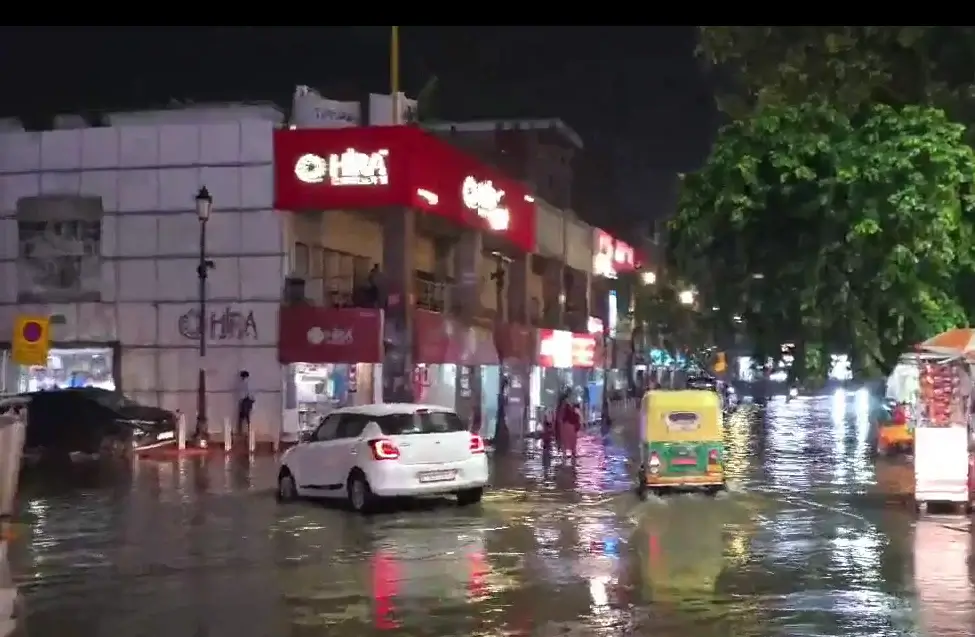
Tomorrow tells a different story. The rain-bearing system weakens, skies turn partly cloudy, and you’re looking at a high of 28°C with at most a stray morning shower. By the time next week rolls around (September 7–10), we’re talking dry, sunny stretches and temperatures climbing back into the 33–35°C range as winds shift from southeasterly to northwesterly. Normalcy, in other words, is a Sunday-onward story.
The Monsoon So Far: June to August, In Retrospect
This season didn’t ease in, it lurched in.
June set the tone with genuine mood swings: dust storms one day, punishing heat the next, then rain out of nowhere. We tracked Noida’s sky having what can only be called a bipolar month over on Instagram (@noida.diary), and if you scrolled through it in real time, you know exactly what we mean.
July opened with an actual rain deficit across the wider NCR, an oddly dry start to what would become anything but a dry season. That changed fast around July 7–8 when widespread showers finally arrived and brought immediate relief from the heat. What followed over roughly 20 hours of continuous rain on July 9–10 put a handful of specific pockets across Noida and Greater Noida under real strain even as the rest of the city moved through the same rain without much drama. In Sector 129, a stretch of road caved in and swallowed a parked SUV amid the downpour, Eco Village-1 residents in Greater Noida West dealt with basement parking waterlogging and seepage from the ceiling above, and on Friday morning the now-familiar Sector 12 boundary wall collapse damaged several parked vehicles, we covered it as it happened on Instagram (@noida.diary). (More on the road-quality side of that same spell, including Sector 73 and Knowledge Park-III, a little further down.)
The human cost of that week was real, too. A 28-year-old man died after falling into a rainwater-filled drain in Sector 58 while walking to work over unstable concrete slabs covering the flooded road. This was one of several rain-related incidents in the district that week, following an earlier one where a 10-year-old boy fell into an open manhole in Greater Noida’s Chi-Phi area. It’s the sharpest possible reminder that “heavy rain” here isn’t just a traffic story. It’s a structural stress test with real stakes.
Noida Authority Quick Response to Noida rains
To its credit, the response was substantial. The Noida Authority deployed teams from all 10 work circles with JCBs, Hyva trucks, Poclain excavators, and Super Sucker machines to clear drains, installed generator sets at underpasses to keep water moving, and stationed pump sets at 28 low-lying locations. A 24×7 Quick Response Team and a dedicated helpline (0120-2423795) were set up for residents to report waterlogging directly.
August was the peak, no contest. Record-breaking downpours around August 6–8 triggered widespread urban flooding. The arterial roads, service lanes, and long stretches of the Noida–Greater Noida Expressway turned into slow-motion traffic disasters. We put together a full carousel documenting it, Monsoon Over Noida – August 2026, because honestly, photos told the story better than words could.
Air Quality Right Now
AQI: 100
Sitting right on the border between Moderate and Poor. PM10 and PM2.5 levels are relatively controlled thanks to the recent monsoon washout, but tomorrow’s AQI is expected to drift into the 100–150 range (Unhealthy for Sensitive Groups). If you’ve got kids, elderly family members, or anyone with asthma at home, keep extended outdoor exposure in check for the next couple of days. You can track live, hyperlocal numbers on the CPCB Dashboard.
The Waterlogging Question — And the Noida vs. Gurgaon Debate
Every monsoon, the same argument resurfaces on Instagram and YouTube, “Which NCR city handles the rains worse, Noida or Gurgaon?” It’s become something of a running joke and a running grievance in equal measure. And this year, it’s worth actually looking at the evidence instead of just the reels.

Noida’s problems this season were real, if concentrated in specific pockets rather than city-wide. The July cave-ins across Sector 129, Sector 73, and Knowledge Park-III, the Sector 12 wall collapse, a life lost in Sector 58, and the repeated Expressway pile-ups in August were genuine failures at those specific locations, and nobody at Noida Diary is going to pretend otherwise. Hyperlocal documenting means naming Sector numbers, not softening them. But naming them isn’t the same as saying the whole city struggles through every rain; the vast majority of Noida commutes through the monsoon just fine.
Quick Reference: Noida’s Waterlogging Hotspots, Monsoon 2026
Underpasses: Sector 60 and the Sector 52-71 underpass are the most consistently flagged, sitting below road level and dependent on pumps working correctly; the Mahamaya Flyover/Sector 94 stretch has also seen repeated waterlogging and traffic delays, including an ambulance caught in floodwater there in August.
Residential Sectors: 19, 27, 34, 51, 53, 63, and 100 — with residents in Sector 53 describing recurring accumulation and Sector 19 reporting rainwater entering homes directly. Localized flooding has also hit Chilla, Barola, and Model Town.
Greater Noida: Expo Mart and Kulesra underpasses, Lal Kuan, Haldoni and Sutiyana T-Points, Kachchi Road, and Gamma 1 and Delta 1 sectors.
Traffic authorities had already flagged 16 chronic waterlogging points across Noida and Greater Noida back in 2024; going into this monsoon, the Gautam Budh Nagar administration expanded round-the-clock monitoring to a reported 28 hotspots, backed by pumping units and 24×7 response teams. Worth remembering: this list shifts storm to storm depending on rainfall intensity and drainage conditions — treat it as a heads-up, not a live status check, and confirm current conditions before you head out. Drop your sector in the comments if it’s missing from this list.
But set that against what Gurgaon goes through most monsoons, and the comparison isn’t close. Gurgaon’s flooding isn’t a bad week — it’s structural and recurring, year after year, at the same handful of locations: Hero Honda Chowk, Rajiv Chowk, Narsinghpur, the Golf Course Extension Road corridor. The city sits in a low-lying area that catches heavy surface run-off from the Aravalli hills, and that geography, combined with encroachments on drainage channels and construction that has damaged sewage infrastructure over the years, means the same choke points flood almost on cue. In past seasons, this has meant NH-8 shut down for days at a stretch, schools closed, and tailbacks stretching 15–20 km. Authorities in Gurugram have launched fresh desilting and drainage repair drives this year specifically because the problem is chronic enough to need a dedicated annual response.
Noida’s flooding, by contrast, tends to be event-driven, tied to specific extreme-rainfall days rather than baked into the city’s geography. That’s a meaningful difference. It doesn’t mean Noida gets a pass on infrastructure, Sector 12 is proof it doesn’t. But it does mean the “Noida is just as bad” narrative that does numbers on social media doesn’t hold up against what Gurgaon deals with as a matter of routine.
And there’s a part of this comparison that rarely makes it into the memes. Driving across Noida in the rains is, genuinely, a treat. Wide sector roads, generous green medians, far fewer of the chronic multi-kilometer chokepoints that turn a Gurgaon commute into a standstill. Even on a heavy day, a Noida drive tends to move. We’ve these videos in our carousel of the beautiful drive through the city mid-downpour, roads wet but moving, greenery in full form. And for the days you’d rather not drive at all, we’ve got a clip that sums up the other side of monsoon life here. Watching the rain roll in from a high-rise balcony with a cup of chai, which is, without exaggeration, pure bliss. That’s the real Noida monsoon experience. A handful of Sectors dealing with real infrastructure pain, and the rest of the city either driving through it comfortably or enjoying it from the tenth floor. Taken together — the geography, the drive, the balcony view — that’s why, memes aside, Noida comes out ahead in this fight most seasons.
We want to hear your version of this monsoon. Which sector or stretch flooded near you? Did you get stuck on the Expressway during the August spells? How did you navigate it — reroute, remote work, just wait it out? Drop it in the comments. We’re building a real, resident-sourced record of how this city actually experienced the season, not just what made it onto the news.
Waterlogged road near you right now?
Our WhatsApp Community is where residents flag flooded stretches, blocked routes, and civic updates in real time — often faster than it hits the news. Join in, share what you’re seeing, and help the next commuter plan around it.
Join the WhatsApp Community →Prefer a weekly digest instead of the real-time chatter? Our newsletter rounds up the week’s weather, waterlogging updates, and events every Sunday — no group notifications required.
For more on what it’s actually like living through Noida’s seasons — heat, monsoon, winter fog and all — check our Living in Noida and Noida Season & Weather categories.
A Pattern, Not a One-Off: Noida’s Sinkhole Problem
Worth being clear-eyed about scale. This is real. But it’s concentrated. Specific pockets with aging pipelines or active construction, not the city at large. Most of Noida and Greater Noida’s roads carry traffic through the monsoon without incident every single day. The locations below keep making news precisely because they’re the same names recurring, not because they’re representative of how the city handles the season.
TOI’s Meenakshi Sinha documented the full spread of it after the July 9–10 spell, and the pattern that emerges is less about rain and more about what was already underneath the road before it fell. The starkest case: the Sector 52-71 underpass, a six-lane, 780-metre stretch built in 2022 for roughly Rs 59 crore. The road was resurfaced only last year to smooth out leftover construction bumps. That patchwork gave way almost as soon as the rain hit.
The same story repeated itself across Sector 73’s Sarfabad locality, where a road section near an under-construction commercial complex, the plot allotted to Avenue Supermarts Limited, caved in badly enough to bring down a boundary wall, sink a Noida Authority transformer and drain nearby, and tilt part of an adjoining banquet hall. The Noida Authority has since issued a show-cause notice to the allottee who is rebuilding the road and drain at its own cost. A road near Knowledge Park-III caved in as well, with cracks showing up in nearby buildings.
In Delta 1, Greater Noida, commuters had to pull a school bus out of a sunken road. No injuries though. But the local RWA’s general secretary pointed to the real culprit – a drainage pipeline. The drainage network is roughly 50 years old, well past its intended lifespan, now failing and leaking regularly, on a stretch that had reportedly been repaired only months earlier.
In Sector 50, a newly built pavement sank into the mud, prompting a resident to publicly question the contractor vetting and quality-check process behind it. Similar issues turned up on the Sector 51 metro station road, in Ecotech 10, and on Surajpur and Pali village roads, with an RWA president in Delta 2 flagging the economic hit to Surajpur traders from repeated road disruption, and another Sector 77 resident noting that some of these very stretches had only just been repaired before chipping and cave-ins reappeared. A founding member of the Noida Federation of Apartment Owners Associations has since written to the Noida Authority CEO requesting a formal investigation and prompt repairs.
Three primary causes of the Road situation
Three things keep showing up as causes across these pockets — incessant rainfall saturating and loosening the soil base under the asphalt; aging or leaking underground water and sewage pipelines quietly washing away the soil that supports the road above them, sometimes over months before anyone notices; and construction disruption like basement excavation or active road-and-drainage revamp work that leaves a stretch structurally compromised right when heavy rain tests it.
Put together, it’s less a citywide failure than a short, identifiable list of trouble spots where infrastructure work and old pipelines meet heavy rain worth naming and tracking, but not a reason to paint the rest of Noida’s monsoon experience with the same brush.
Beyond the Roads: Power, Water, and Waste Pile Up Too
The infrastructure strain wasn’t limited to cave-ins and cratered roads — the same July spell exposed how quickly other basic services buckle too. TOI’s Meenakshi Sinha documented much of this on the ground, the rest below is resident-reported and crowd-sourced.
In Sector 122, the flooded Gaur City underpass added to an already-rough commute for Gaur City 2 and Cleo County office-goers, who’d been dealing with underpass construction traffic even before the rain. One resident summed up the year-long frustration bluntly, “It does not feel like Noida is a planned city.” Several locals pointed to a simpler culprit behind the timing, the usual pre-monsoon drain-cleaning drive reportedly didn’t happen this year.
Sector 19 saw rainwater seep directly into homes, raising sanitation concerns despite a Rs 12 crore drain renovation completed there just two years ago that was meant to fix exactly this. In Behlolpur, Sector 63, at least three electric poles came down after the rain, in an area residents say already sees frequent electrocution risk and chronic waterlogging during monsoon. Advice locally is to step out only when necessary.
In Greater Noida, a drain cover caved in between Sector Gamma 1 and Beta 1, leaving an exposed hole and a real accident risk, part of a wider pattern of people and vehicles falling into uncovered drains across the region this season.
The Disruption Spread to Workplaces Too
Ecotech III’s industrial area saw water entering factories, damaging raw material and finished stock, halting production, and keeping workers from reaching their jobs. The local industrial association called it a sign that pre-monsoon prep simply wasn’t adequate.
Near the GB Nagar district court in Surajpur, lawyers and judges were wading through knee-deep water to reach their offices, forcing the bar association to relax attendance rules. This raised a genuine open question of how long court operations could keep functioning if the rain didn’t let up.
Extended power outages knocked out water supply
Elsewhere, extended power outages knocked out water supply for residents of Shatabdi Vihar (Sector 52). Rain-related garbage collection was suspended in the same sector. Shri Krishna Apartments in Sector 117 went without water for an extended stretch despite repeated complaints. Severe waterlogging on the Sector 57-58 dividing road left several vehicles stranded in knee-deep sludge.
Noida Authority’s action plan
To its credit, the Noida Authority has engaged directly on this. The Noida High-Rise Federation’s president raised these issues and requested an on-ground inspection. In response, the Authority’s officer on special duty confirmed a budget has been allocated for cleaning and strengthening drainage networks, with work underway. The Authority’s counter-point is worth noting too. Officials flagged improper waste disposal as a major contributor to waterlogging, and asked resident associations to keep rainwater harvesting pits and internal drainage systems properly maintained, since interior-road flooding is often as much a maintenance gap as an Authority one.
What’s Coming: The Week Ahead
The active spells, cloudy skies, lightning, gusty winds. are expected to persist intermittently through mid-September as the monsoon makes its final passes through the region. But the broader trend from here is retreat: winds turning northwesterly, skies clearing, and daytime temperatures climbing back toward 33–35°C by early-to-mid next week. Drier, more pleasant weather takes hold properly as we move into late September and October.
Sawan-Bhadon, the Other Calendar
While IMD tracks fronts and pressure systems, a lot of Noida households still mark the season the old way — by Sawan and Bhadon. In the North Indian (Purnimanta) calendar, Sawan ran July 30 to August 28, and Bhadon picks up right after, August 29 to September 26. It’s the stretch that gave us Hariyali Teej and Nag Panchami in mid-August, Raksha Bandhan on the Sawan Purnima (August 28), and now carries us through Janmashtami (September 4), Hartalika Teej and Ganesh Chaturthi (both September 14), and Anant Chaturdashi (September 23). The festival calendar and the rain calendar run side by side — one measured in millimetres, the other in Mondays and moon phases.
Between the two, it’s a fitting way to close out the season — soaked roads and Sector-level chaos on one hand, Teej and Rakhi on the other. That’s Noida’s monsoon: messy, occasionally maddening, but never boring.
Got a waterlogging story, a Sector to call out, or a survival tip for next monsoon? Tell us in the comments below.
